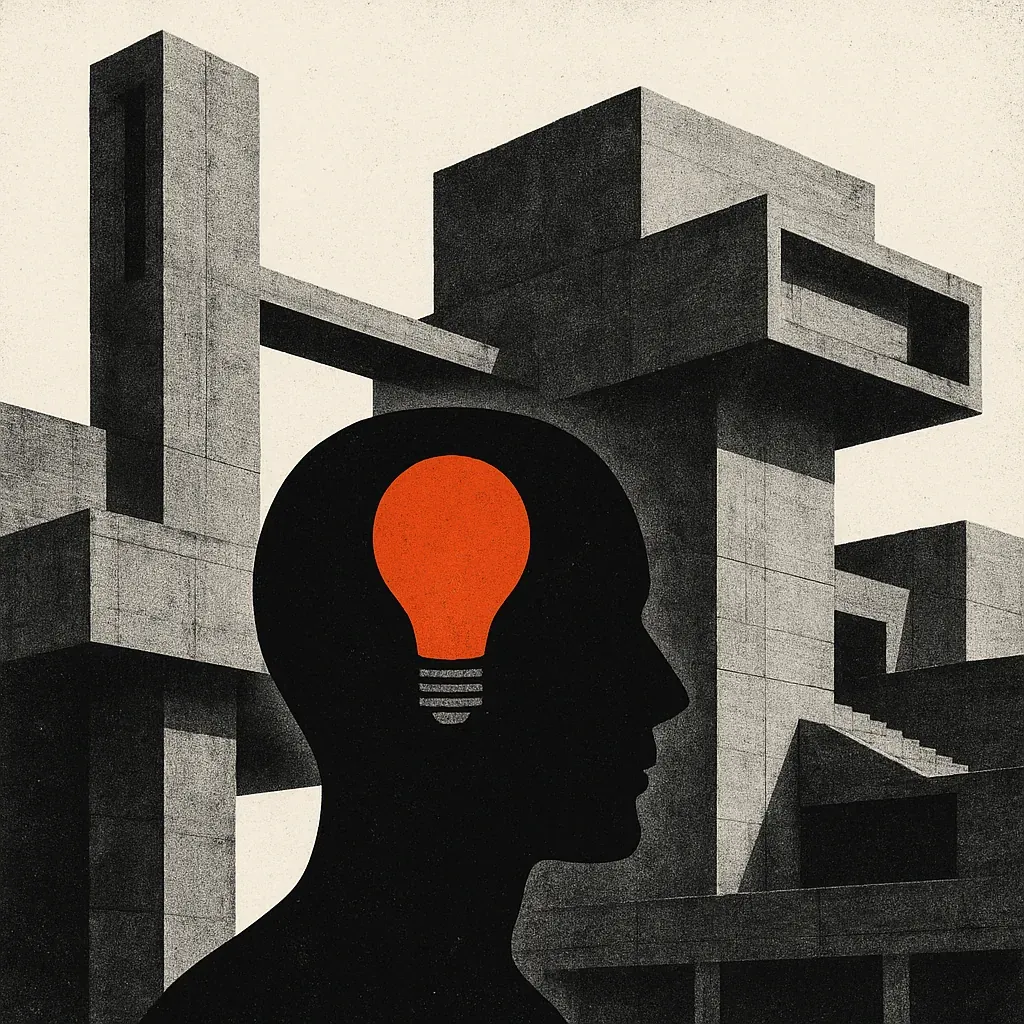
I have never struggled with ideas. I struggle with getting them out of my head before they rot in there.
That has been the pattern for most of my life. I will have a great thought while driving, or walking, or halfway through something else, and for a moment it feels obvious that I should write it down, expand it, publish it, and turn it into something useful. Then real life shows up. A text. A meeting. Another tab. A side quest. A completely unrelated obsession. Suddenly the idea is gone, or buried under enough friction that it might as well be.
That is the part people do not always understand about ADHD. It is not a lack of ideas, and it is definitely not a lack of ambition. For me, it is executive function. It is the invisible tax between “this is interesting” and “this is shipped.”
That tax has been expensive as hell.
I love blogging. I also apparently love abandoning blogs.
This is not my first attempt at building a space where I can regularly share what I am thinking, building, testing, or learning. If you have followed me for any amount of time, you already know this.
I get excited, build a site, write a few posts, and feel good about it for a minute. Then the machinery of keeping it alive starts to matter more than the ideas themselves. Suddenly I am maintaining a system instead of expressing a point of view. Then it starts to feel like homework, and eventually the whole thing dies on the vine.
I have done this enough times that I can no longer pretend the issue is just finding the right platform. The issue is that my brain is very good at generating sparks and very bad at repeatedly performing the boring middle. That boring middle is where most blogs go to die.
So this time I am not blogging alone
This time around, I am trying something different. I am treating this blog like a co-authored platform with AI.
Not in the weird “AI writes everything and I become a content husk” kind of way. I still want the ideas to be mine. I want the opinions to be mine. I want the mess, the taste, the perspective, and the lived experience to still come from me.
What I do not want is to keep burning all my energy on the parts that require executive function more than actual thinking. So the new model is simple. I talk to AI. I dump rough thoughts into AI. I send links to AI. I hand over half-formed notes, observations, and fragments. Then AI helps me shape the material into something publishable.
That is the experiment.
I do not need AI to be me. I need it to help me get out of my own way.
The heavy lifting matters more than people want to admit
There is a certain kind of person who hears this and immediately wants to argue about authenticity. I do not care. Seriously.
The bottleneck in my life has almost never been whether I had something to say. The bottleneck has been whether I could consistently create enough structure around myself to say it in public. That means outlining, wrangling notes, turning voice memos into paragraphs, and figuring out titles, excerpts, tags, formatting, images, publishing flow, and all the other annoying little decisions that pile up until the original idea no longer feels worth it.
AI is really good at helping with that layer. Not perfect. Not magical. Not remotely autonomous in the way tech people love to pretend. But good enough to meaningfully reduce the friction between idea and artifact, and for someone like me, that matters a lot.
We built this site with almost no real coding
The funniest part is that this blog itself is probably the clearest example of the point.
I rebuilt this site with Codex and barely wrote any code myself. And when I say barely, I mean it. The site structure, content model, styling direction, imports from my old Ghost blog, image generation pipeline, deploy workflow, route cleanup, and writing system all got built mostly through conversation.
I told Codex what I wanted. I reacted to what it made. I adjusted the visual direction. I tightened copy. I added my .env file. I made a few minor UI tweaks because I am still me and I am always going to want to nudge the details.
But the amount of traditional sit-down-and-type-every-line coding I personally did on this thing was almost comically low.
That is not because I suddenly do not know how to build things. It is because I finally have tools that let me stay closer to the part I am actually best at: direction, taste, critique, structure, and deciding what the thing should be. That is a huge shift.
This is what AI is actually good for in my life
A lot of AI discourse still feels weirdly theatrical. People are either acting like it is fake and useless, or acting like it is a god machine that will replace every kind of labor by Tuesday.
My experience has been way less dramatic and way more useful. AI helps me move faster when momentum matters, reduce the startup cost of writing, organize scattered thoughts, turn rough fragments into usable drafts, and build tools and workflows without getting trapped in implementation hell.
That last one is probably the biggest. When I get stuck, it is usually because the activation energy is too high. There are too many micro-decisions, too many tabs, too many unclear steps, and too much context switching. AI helps lower the activation energy, and once I am moving, I am usually fine.
So this blog is basically an executive function hack now
That is really what this is. This blog is no longer just a place where I publish writing. It is a system designed to help me publish despite my own patterns.
That means I can brain dump an idea and have it shaped into a draft. I can save links and let AI help me turn them into commentary. I can create images without opening another design rabbit hole. I can maintain a consistent voice without starting from zero every time. I can spend more time thinking and less time fighting the machinery.
Will it work? Honestly, I do not know.
I have built enough abandoned systems in my life to know better than to declare victory on day one. But this does feel different, and not because the platform is better. It feels different because the workflow is better. I am no longer asking myself to be the only engine in the process.
We will see if this sticks
That is the real test. Not whether AI can write a paragraph. Not whether a tool can generate a nice image. Not whether I can spin up another website and feel clever for an afternoon.
The real test is whether this setup helps me keep showing up. Whether it helps me turn more half-formed thoughts into finished posts. Whether it helps me share the things I am constantly thinking about before they disappear into the usual ADHD fog.
That is what I want. More ideas out in the world. Less friction. Less executive function tax. More evidence that I can build systems that actually work with my brain instead of trying to shame it into behaving differently.
So that is what this is. Co-blogging with AI. Not because I want a robot ghostwriter, but because I want a publishing process that I might actually keep alive.